

What is PPM concentration? How much PPM in water is safe to use?
1. What is PPM concentration?
PPM (short for Parts Per Million) is a measure of the volume or mass of a substance, usually a metal or a noble gas. 1 PPM is equivalent to 1/1,000,000, or 1 mg/kg.
This unit is widely used in many fields such as chemistry (measuring chemical shifts), biology, physics (measuring the amount of minerals and gases), manufacturing. Especially in water treatment, PPM helps measure the concentration of TDS (total dissolved solids). In short, PPM is an important unit when it is necessary to measure very low concentrations of a substance, especially when that substance can affect human health or the surrounding environment.
PPM is applied in many different important fields in life.
2. What is a safe PPM in water?
According to World Health Organization (WHO) standards, TDS concentration in water can affect the taste of water and is classified as follows:
- Excellent : TDS below 300 mg/liter
- Good : TDS from 300 to 600 mg/liter
- Average : TDS from 600 to 900 mg/liter
- Poor : TDS from 900 to 1200 mg/liter
- Health hazard : TDS above 1200 mg/liter
Thus, to ensure safety when used directly, the TDS content in water should be below 300 mg/liter. However, water with too low TDS may not be tasty because it tastes bland and lacks minerals.
Currently, untreated water sources often have TDS levels exceeding this level and boiling cannot completely remove these solids. Therefore, the optimal solution is to use a water purifier that can remove bacteria, impurities and dissolved solids,...
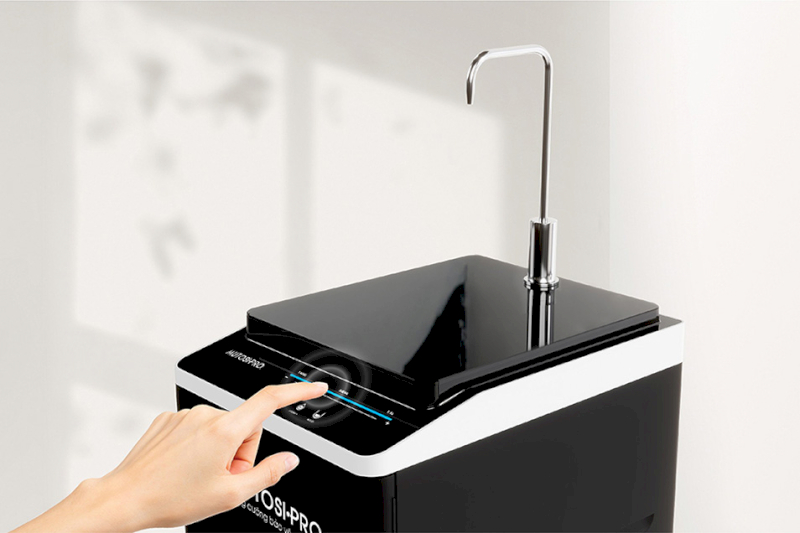
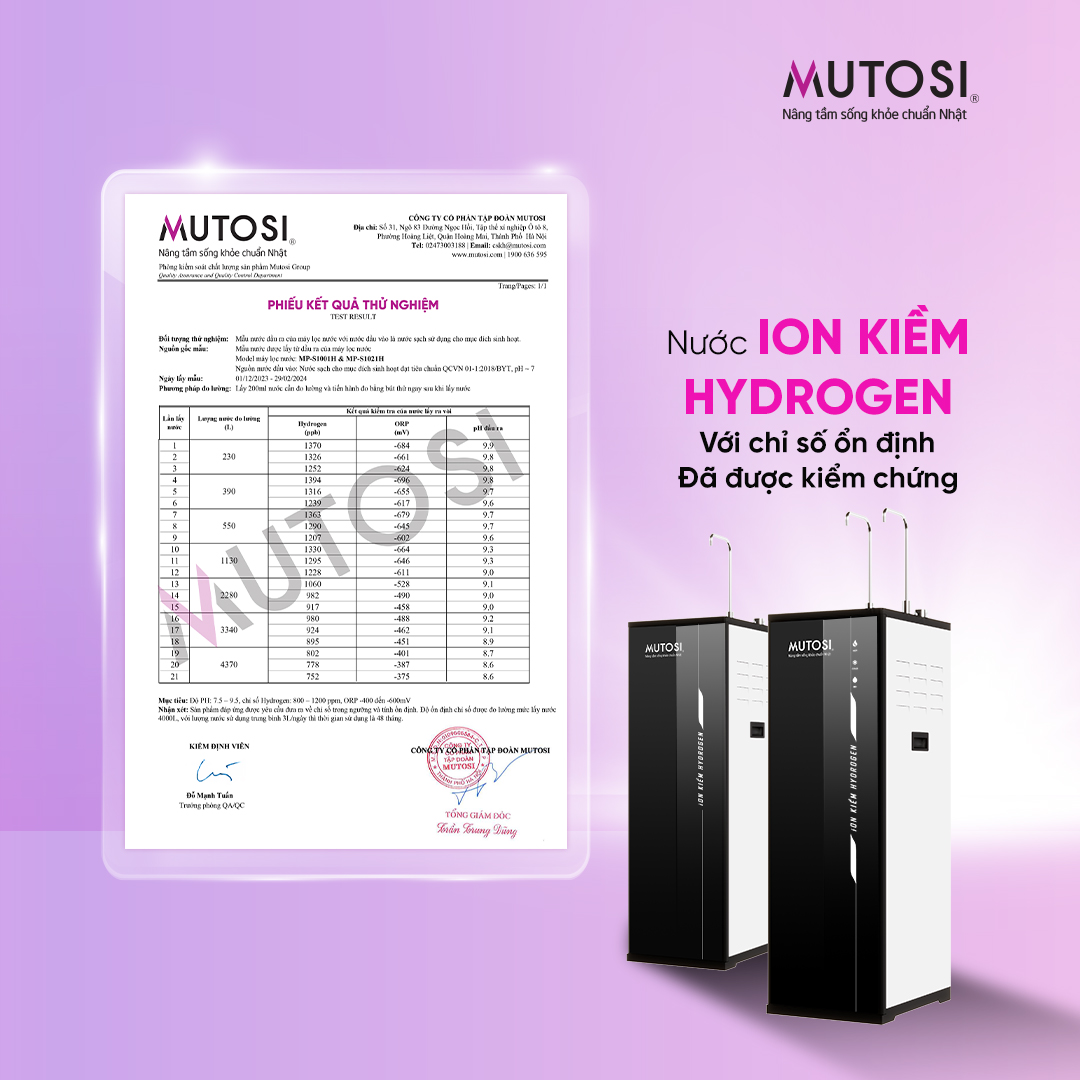
You can refer to Mutosi's water purifier lines, using specialized RO membranes to help the filtered water be safe, ensuring the TDS concentration is below 300 mg/liter. In addition, some models also integrate the feature of monitoring the TDS index after filtration right on the body of the machine, which is extremely convenient, such as: Mutosi TrueSmart MP-TS1015 Hydrogen 10-core Hot and Cold Water Purifier , Enrolas 10-core Hot and Cold Water Purifier, Mutosi MP-6100HCE ,...
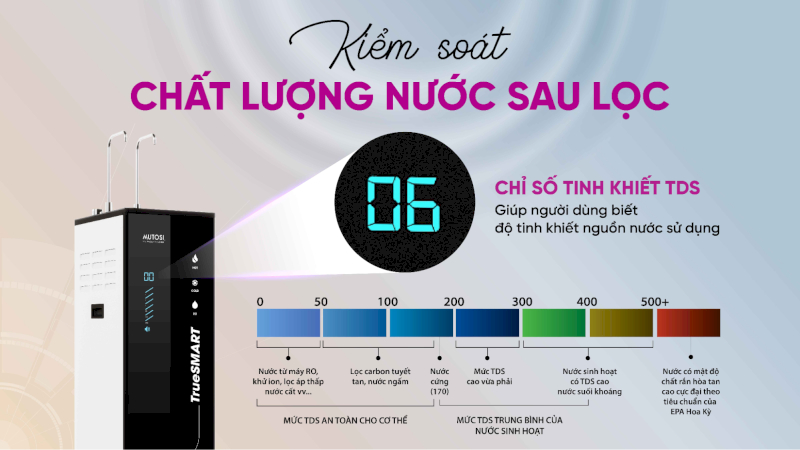
Mutosi water purifier helps control TDS concentration in water effectively
3. How to calculate PPM concentration in water
The calculation of PPM concentration in water is based on the concentration of solutes in the solution, with 1 PPM ~ 1/1,000,000 of the solution.
You can use one of the following three formulas to calculate PPM concentration:
- C(ppm) = 1,000,000 xm(solute) / (m solution + solute) (In which: m(solute) is the mass of solute, m(solution) is the mass of solution)
- C(ppm) = 1,000,000 x m(solution) / m(solute) (In which: m(solution) and m(solute) both have the same unit of mg)
- C(ppm) = m(solute) (mg) / V (l) (In which: m is the mass of solute in mg, V is the volume of solution in liters)
Each formula can be applied depending on the available parameters to accurately calculate the PPM concentration of the solute in water.
There are different formulas to calculate PPM index depending on available parameters.
4. Some frequently asked questions about PPM concentration
1. How many mg/l is 1 PPM?
1 PPM = 1 mg/l
2. What PPM is safe?
Safe PPM levels depend on the substance being measured and its intended use. Specifically:
- From 0 – 100 PPM: Water meets safety standards for the body, can be used for drinking or cooking.
- From 100 – under 400 PPM: Water is only suitable for domestic use, not for drinking.
- From 400 - 500 PPM or more: Water is seriously polluted, absolutely do not use to ensure health.
3. How many g/m3 is 1PPM?
1 PPM equals 1 g/m³, this is the conversion commonly used in industry or environmental research.
4. How many ml is 100 PPM?
100 ppm is equivalent to 100 ml of solute dissolved in 1,000 liters of solution.
5. What is PPM in agriculture?
In agriculture, PPM is an index that represents the proportion of chemicals (such as fertilizers, nutrients or chemicals) present in water or soil, helping to assess the suitability for crops.
6. How to calculate PPM in production?
PPM = (Substance to be measured/Total volume) × 1,000,000
For example, if 2 grams of salt are dissolved in 1,000 liters of water, the PPM will be: PPM = 2/1000 x 1,000,000 = 2,000 PPM.
Understanding PPM concentration is essential to ensure health safety and contribute to optimizing efficiency in production and life. Always check and use water sources, products or materials with appropriate PPM concentration to protect your health and living environment.