


Warning: Be careful when using boiled and cooled rainwater to avoid getting sick.
1. Reasons why boiled and cooled rainwater is unsafe
There are many reasons why using boiled and cooled rainwater is no longer safe. Including:
1.1. Rainwater sources are heavily polluted.
Rainwater in a state of severe contamination will not be suitable for use even after boiling. Specifically:
- With improperly collected rainwater from the roof, early season rainwater, early storm rainwater often contains a lot of acid and impurities, dirt, etc.
- With rainwater in polluted environmental areas, chemicals in the air will dissolve and contaminate the rainwater.
Impurities, bacteria, viruses, parasites, chemicals, etc. are all components that can be dangerous to human health. Therefore, carrying these components makes rainwater no longer a suitable choice for daily drinking and eating.
According to the announcement of a group of researchers in the journal Environmental Science & Technology in August 2022, it is shown that rainwater everywhere has concentrations of toxic PFSA (including Alkyl Per and Polyfluorinated substances) exceeding the safe level for health. That also means that if there is no radical solution to this problem, rainwater should not be used for drinking, even if boiled.
Based on the latest U.S. PFOA guidelines, rainwater is also considered unsafe for human consumption. The CDC also says that households should not use rainwater unless it has been treated with additional measures.
1.2. Boiling only kills bacteria, it does not remove chemicals in water.
Although boiling at 100 degrees Celsius can kill bacteria and germs, it will not remove impurities and toxic chemicals. Therefore, in these cases, using boiled and cooled rainwater can still carry pathogens that are harmful to health.
1.3. Water can be re-contaminated
Rainwater that has been boiled and left in the environment for too long may face re-infection and become unsafe. Specifically, when boiled, bacteria and germs will decompose but will not disappear completely but will become a form of "matter" that exists in the water. Bacteria living in the environment will see them as "food" and be attracted to them, entering the water environment. Over time, the amount of bacteria that appear will increase. As a result, the water will be re-infected, even more seriously than before boiling.
The consequences of using boiled and cooled rainwater cannot be underestimated, especially for those who have the habit of boiling water for drinking for 2-3 days. This is enough time for bacteria to grow strongly and cause health problems for people when drinking it.
In addition, using boiled and cooled rainwater is not really good for the digestive system. The reason is that the water will lose the amount of oxygen necessary for the development of beneficial intestinal bacteria.
According to Associate Professor Dr. Nguyen Duy Thinh, Institute of Biotechnology and Food Technology, Hanoi University of Science and Technology, when boiled, bacteria, parasites and some toxic gases such as NH3, H2H, ... will be treated. However, this This also releases oxygen into the water, thereby hindering the growth of microorganisms in the intestines.
2. Harmful effects of using boiled and cooled rainwater
Using boiled and cooled rainwater can have some negative consequences, such as:
2.1. For health
As mentioned in part 1, boiling will not remove all the chemicals in rainwater, including PFAS. Therefore, this type of water can still directly threaten human health and safety.
According to Professor Ian Cousins (Faculty of Environmental Sciences, Stockholm University), previous studies on PFAS have shown that this group of chemicals is extremely toxic and can cause many dangerous diseases, even infertility, cancer and reduce the effectiveness of vaccines.
In addition, rainwater tends to be acidic with a low pH that is not suitable for the body to absorb, which can affect the digestive system, teeth, gums and hinder the absorption of calcium, etc. Normally, the pH of rainwater is only 5.0 - 5.5, while the World Health Organization recommends only using alkaline water, with a pH from 7.0 to 9.5.
2.2. For household items
Using boiled and cooled rainwater in daily life can cause some inconveniences such as:
- White scale deposits form in kettles and other water-using appliances due to the presence of impurities in rainwater.
- Reduces the life of appliances because the acidity of rainwater can cause corrosion, rust, etc.
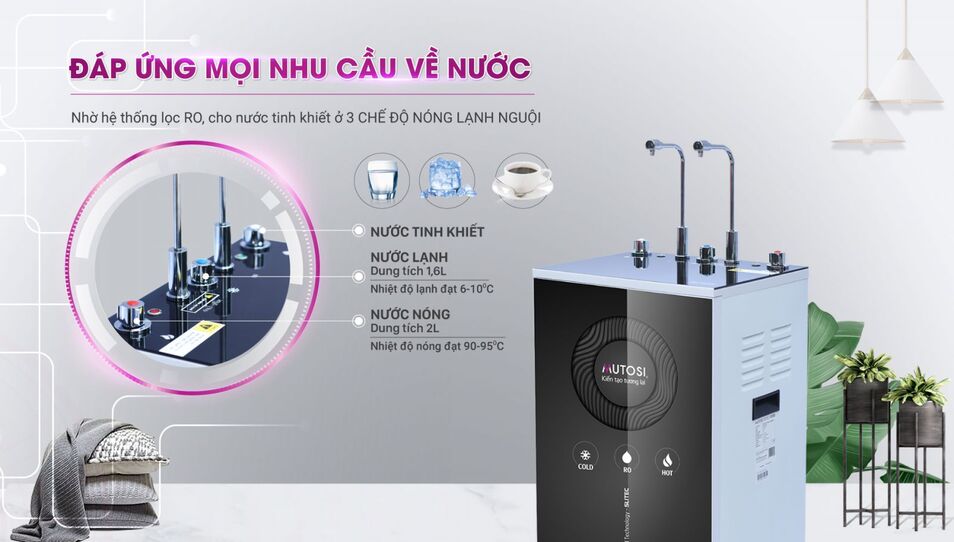
Compared to boiling, using RO water purifier is considered a better solution to solve all the problems of rainwater. With a rough filtration system combined with a specialized RO membrane, impurities, bacteria, viruses and even toxic chemicals dissolved in water are all treated. From there, the water source will become cleaner and qualified for use.
In particular, the new generation of Mutosi water purifiers equipped with Slitec RO membranes meeting NSF/ANSI 58 standards has the ability to remove a variety of impurities, chemicals, bacteria, ... effectively up to 99.99%. The technological advantage allows the device to ensure superior performance to provide truly safe water, contributing to protecting and improving the Japanese standard of healthy living for every family.
Readers can refer to detailed product information at: Mutosi RO water purifier or price of 2-tap hot and cold water purifier
Using boiled and cooled rainwater without additional treatment can still have many negative effects on human health and daily activities. Therefore, we need to carefully consider the choice of water source and water purification method to ensure real safety for ourselves. For advice and sharing of other useful information related to this issue, please contact Mutosi directly via hotline: 1900 636 595.
Note: The information in the article is for reference only.

![[REVEALED] Top 7+ Most effective and easiest ways to treat hard water](https://storage.sudospaces.com/sudo-mutosi/uploads/media/phuong-phap-xu-ly-nuoc-cung-1694.jpg)